
Rules
Celebrity Business Data 2027: Where to Find It
Celebrity business data 2027 comes from filings, not headlines: Form D notices, TTB permits, franchise disclosure documents and state registrations.
What to take away
- Filing records, not press releases, carry the dates and amounts behind celebrity business data 2027.
- Four documents do most of the workForm D notices, alcohol permits, franchise disclosure documents and state registrations.
- Category activity concentrates in spirits, apparel, media and minority sports stakes.
- Survival shows up in renewed permits and updated registrations rather than launch coverage.
- Structure decides the numbers, so read the entity before quoting a valuation.
Where the 2027 records come from
Headlines about celebrity ventures in 2027 usually arrive with a valuation attached and little else. The verifiable trail is narrower and more useful. It runs through filings, permits and registries that name the parties, the amounts and the dates.
A search of SEC EDGAR filings by sponsor or brand name shows what actually reached the public record. Form D notices for private placements sit alongside merger proxies and periodic reports. SEC rules require the notice within 15 days after the first sale in the offering, so the filing date itself tells you when a deal closed.
One headline can hide several arrangements at once. An overview of celebrity companies sets out the four structures, who supplies the operating capability and what the public record really contains.
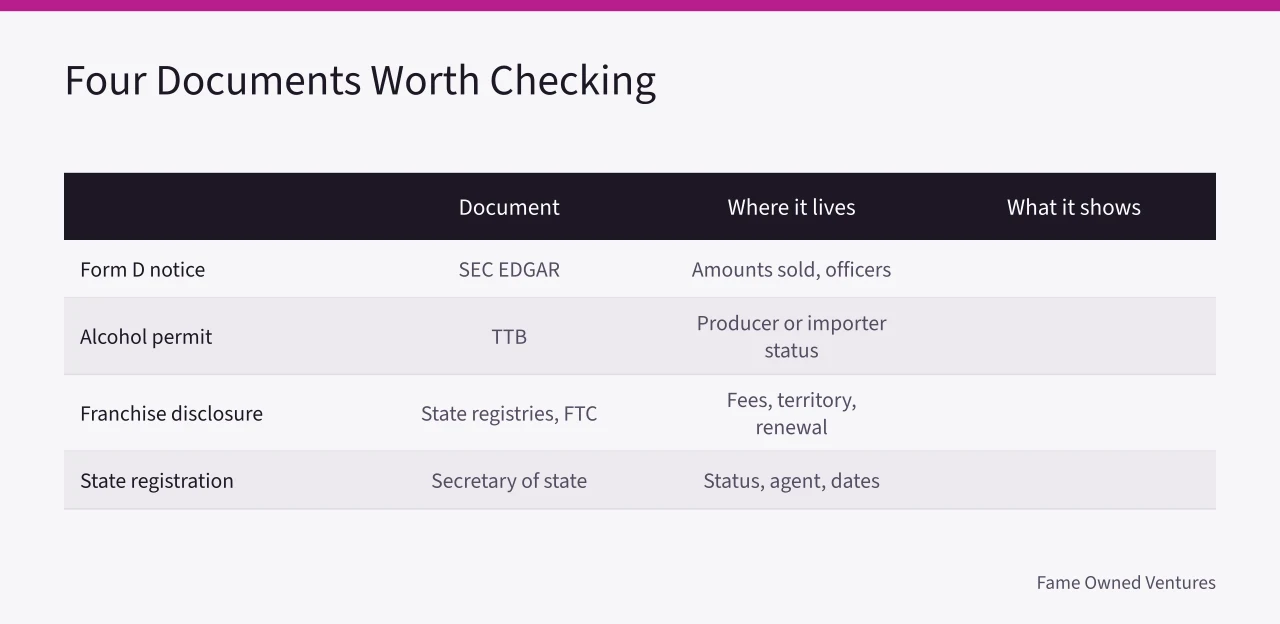
The four documents worth checking
| Document | Where it lives | What it shows |
|---|---|---|
| Form D notice | SEC EDGAR | Amounts sold and named officers |
| Alcohol permit | TTB | Producer or importer status for spirits brands |
| Franchise disclosure document | State registries and the FTC | Fees, territory terms and renewal conditions |
| State business registration | Secretary of state | Entity status, registered agent and filing dates |
A franchise-based celebrity food brand must deliver a disclosure document at least 14 calendar days before a sale. The FTC Franchise Rule compliance guide lists what that document has to contain.
State records live with the secretary of state in the state of formation. Delaware's Division of Corporations and California's Secretary of State both let anyone search an entity by name and read its registered agent and filing history.
Where spirits, apparel and media differ
Spirits brands leave the longest paper trail, because alcohol rules require a permit before any sale. The TTB spirits page sets out permit classes and labeling duties for distilled spirits.
Apparel and shapewear deals often stay private, so fewer records surface. Media ventures leave different marks, through copyright registrations and network contracts. League rules govern how large a minority sports stake can be and who must be approved.
Tequila, shapewear, media companies and sports stakes each sit in a broader directory, with each entry showing how the brand earns.
Survival signals and what renewals show
Launch coverage rarely reports what happens three years on. Permit renewals, updated registrations and amended filings do. A brand that stops renewing a permit or loses its registered agent has usually changed hands or closed.
Signals worth tracking each quarter:
- Permit renewal dates
- Registered agent changes
- Amended Form D filings
- Trademark assignments
Whether a venture outlives its founder's exit often depends on who supplies the operating capability. Licensed partners, franchisees and management companies carry different obligations.
A single headline number can cover a minority stake, a licensing fee and a franchise agreement at the same time.
How to trace a venture through permits and filings
Tracing a tequila stake
- Search the brand name in SEC EDGAR and note every Form D date and dollar figure.
- Check TTB permit records for the producer or importer named on the label.
- Pull the state business registration for the entity and read its agent history.
- Compare dates, because a permit predating a Form D often means the deal closed before the filing.
The same method works for a shapewear line or a podcast network. Royalty splits and ownership of recordings appear in copyright records and contractor agreements.
Reading a brand's own claims alongside its filings shows where a public number and a filed number diverge.